


The
Around the world, apps in every sector from shopping to exercise to healthcare and entertainment are seeing increased downloads as consumers get ever more accustomed to using their favorite apps for every day tasks.
Retailers and other companies need only glance at such trends to understand the urgency in shifting resources to increase app engagement to maintain and increase revenue in this compeititive mobile app environment. What marketers and agencies may not realize is that you can link into an app from any channel whether it's paid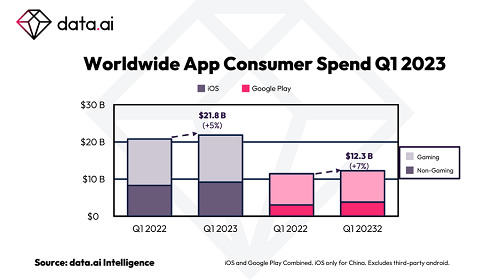
If you have a paid search campaign that is sending app users back to your mobile website you could be losing revenue. Marketers and agencies can take control over the consumer journey with paid search campaigns that include app and your website in the same campaign. You just need the right link behind your ads and the right app linking platform.
Mobile App Deep Linking without SDKs
You don't need SDKs or technical resources to update your paid search campaigns to open your app for iOS and Android from the same link. Marketers can update existing paid search campaigns with app deep links that can open your brand's app if installed while giving you control over the fallback URL when it's not installed. This blog post takes you through the steps for turning a typical web search campaign into a powerful channel for app re-engagement and downloads.
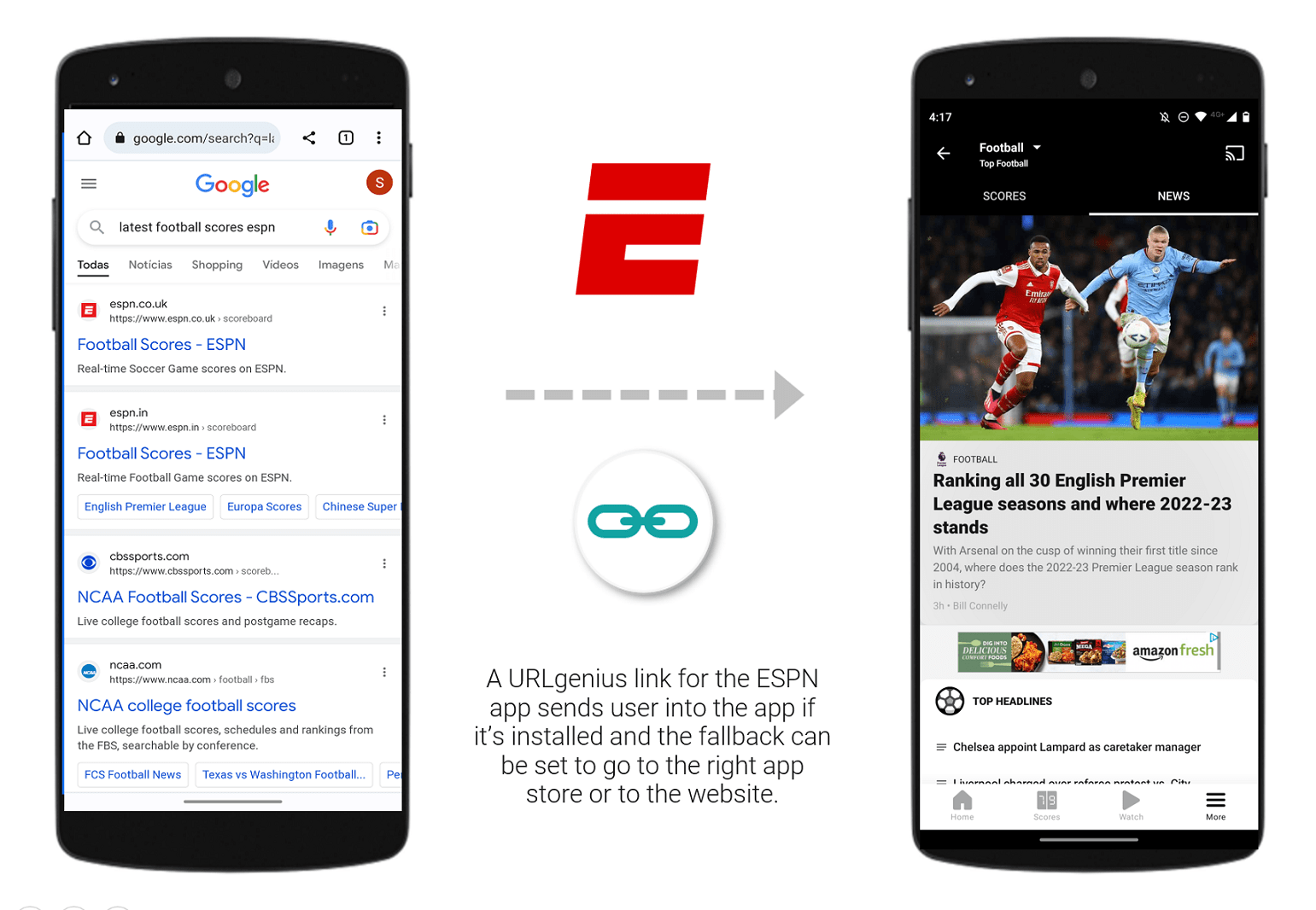
Depending on the goals of your campaign, change the fallback setting instantly to go to the app stores or a web URL. Set the fallback URL to go to the right app store if your goal is to increase app installs or to the web URL if you have different goals.
1. Create deep links to your app for paid search campaigns
App deep linking platforms like URLgenius are designed for marketers and agencies and let you create and test deep links for your app immediately. If you have a large complex search campaign you can start by updating just a few of the links for a few different keywords. To create a deep link you simply paste the web URL from your search campaign into the home page. Note that you can customize the end of the URL to align it with the keyword or campaign. In this example, we'll create a deep link to the Ticketmaster app for the play Hamilton.
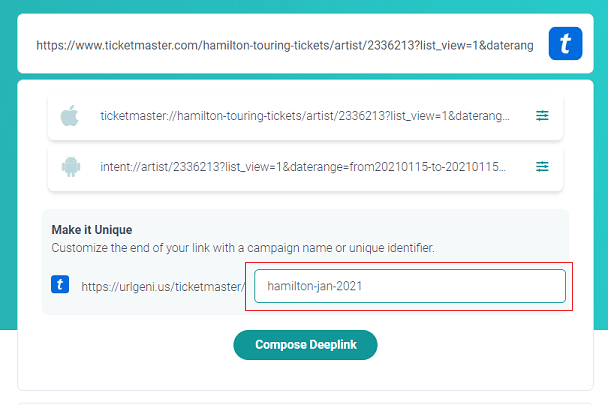
2. Append tracking parameters and set fallback URL
When you select 'Compose' you will be brought to the settings page for the deep link where you can copy it to place into your search campaign.
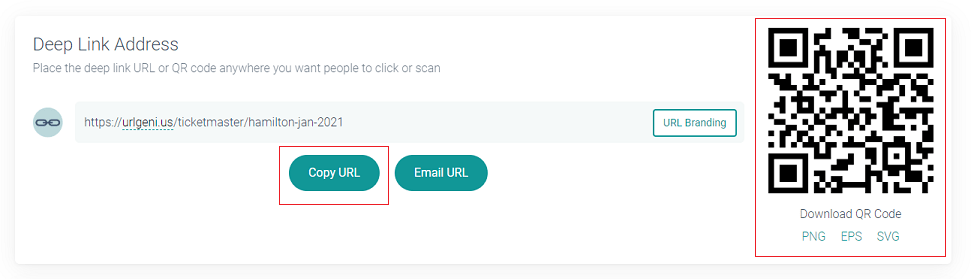
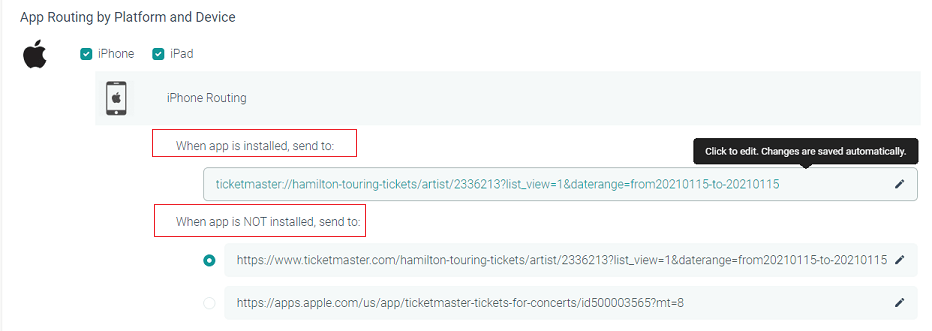
The settings page is also where you can change the fallback destination for the deep link by platform and device. Note that you can append tracking parameters before you compose the link or you can add or change tracking parameters any time here in the settings. Include tracking parameters for your search marketing platform in addition to your web and analytics platform.
3. Use your brand's domain for your app deep links
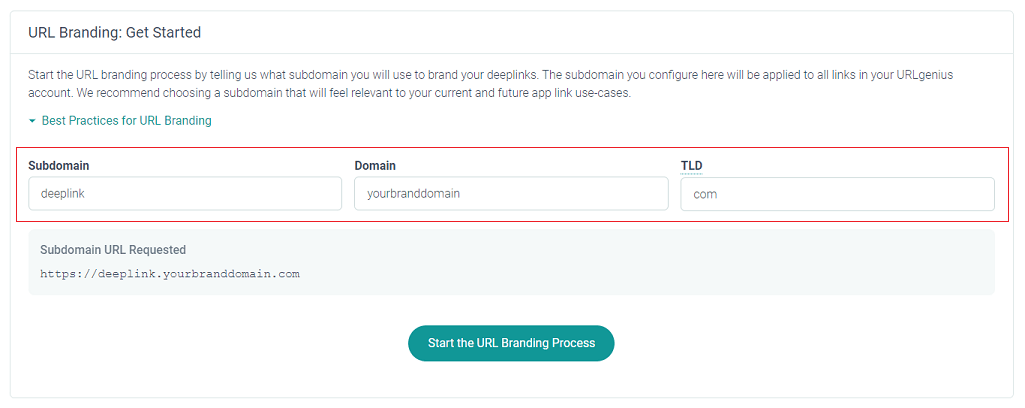
A best practice is to use your brand's domain for app deep linking. This is an optional feature that you should be able to setup in your app deep linking account. This will inspire customer trust while leveraging your domain’s quality score in your search ads. You just need to have your web team or hosting provider create a subdomain and a CName record that points to your deep linking provider.
4. Use the tracking template feature in Adwords
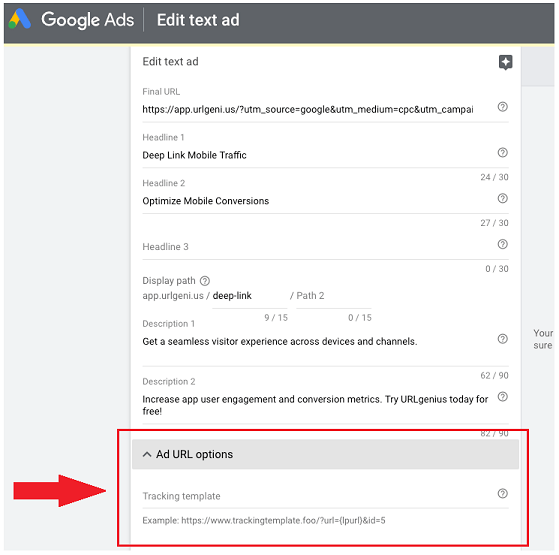
Cloud-based app deep linking platforms like URLgenius act as a redirect that contains logic that enables the your app deep links to open the app on iOS and Android depending on the device clicking the link. You can also control the fallback destination at the link level for when the app is not installed. Remember that URLgenius link is not your final destination which is still your default web URL. For that reason, make sure to enter your deep link into a tracking template in your Adwords setup.
The format of the link that goes into the tracking template has the final destination appended to your deep link. Continuing with our example for Ticketmaster the link would look something like this:
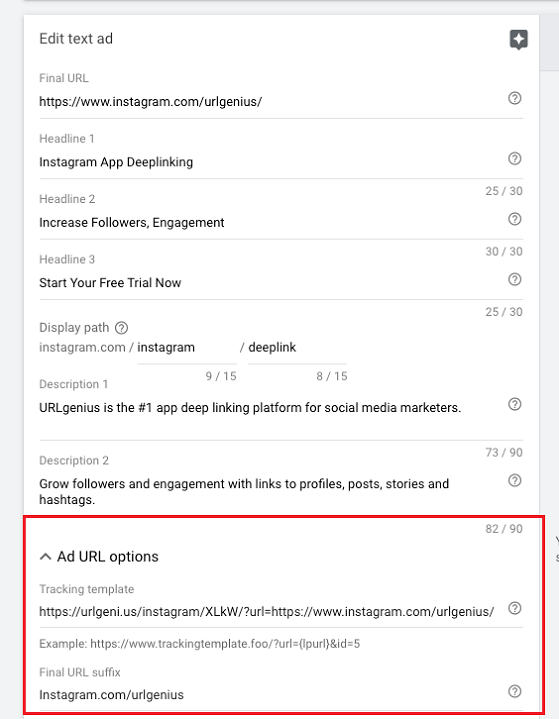
Instagram Pro Tip: You can also learn how to Deep Link to Your Instagram profile from Adwords. Using the same concept, you can promote your Instagram profile by linking into the Instagram app from an Adwords campaign. The URLgenius link to your Instagram profile is the redirect to be entered into the tracking template. This example uses the URLgenius Instagram profile.
Display URL:
instagram.com/urlgenius
Final URL:
https://www.instagram.com/urlgenius
Tracking Template URL:
https://urlgeni.us/instagram/XLkW/?url=https://www.instagram.com/urlgenius/
That's the final step. Now you can turn on your campaign!
DeepLink Into Apps from Paid Search Campaigns
This approach to app deep linking gives marketers and agencies more control over the consumer journey as they work to optimize revenue and paid search in ways that can immediately break down any marketing silos between your app and website while increasing campaign ROI.
Start with a few key words and measure the difference in conversion. The first thing you will learn is what percentage of the people clicking on your paid search campaigns already have your brand's app installed. You might be surprised at what you find.
Learn more about how instant app linking increases sales and conversion:
If you found this content helpful, check out some of our latest how-to posts for app deep linking, attribution, QR codes and more:
- How to Generate a Single QR Code to Download an App from iOS App Store and Google Play
- How to Generate Amazon Mobile App URLs for PPC Campaigns to Open the App
- Smarter App Install Banners: A Radically Easy Approach To Grow Organic App Installs
- How to Generate Links to Open Mobile Apps from Snapchat Ads and Stories
- How to Generate Links to Open Mobile Apps from YouTube Ads and Videos
- How To Generate Links to Open Mobile Apps from TikTok Ads and Profiles
- How to Generate Mobile App Links for Instagram Ads, Stories, and Profiles That Directly Open Your App
- How To Generate Links to Open Mobile Apps from Facebook Advertising
- How To Track App Downloads and Engagement with App Deep Links and Google Analytics UTM Tags
- iOS 14: Shift Focus to Organic App Install Strategies While You Have Time
- How to Instantly Generate Custom QR Codes to Open Apps and Websites
- Smart App Banners for Mobile Websites
- How to Generate One Link to Both App Stores to Grow App Installs and Attribution Data
- 3 Ways to Optimize URL Schemes to Maximize App Deep Linking Opportunities